
The most dangerous phrase in a server room isn’t “the system is down.” It’s a half-joke whispered with a grimace: “Don’t touch that.”
We’ve all seen it. The beige box in the corner that “still works,” runs a critical process, and has survived so many duct-tape fixes that nobody feels confident even rebooting it.
In the industry, we call this Legacy Debt. It isn’t just old technology; it’s old technology that has become a dependency. It’s the quiet accumulation of risk that waits for the worst possible moment to turn into downtime, a security breach, or a panicked, expensive emergency upgrade.
At Leap Forward Tech, we believe visibility is the best antidote to fear. A legacy debt audit isn’t a theoretical exercise it’s about bringing those “don’t touch” risks back into the light so you can manage them on your terms, not the hardware’s.
What Legacy Debt Really Looks Like (and Why It Stays)
Legacy debt is “old gear” that has become invisible because it’s been normalized. It’s the edge device nobody remembers buying or the workaround that became a permanent pillar of your workflow.
As the team at Infinite Lambda rightly points out, legacy debt “silently accrues costs and constraints” until it becomes “too costly to ignore.” In other words, you pay interest on this debt every day in the form of inefficiency and anxiety.
The Security Wall The real danger surfaces when “old” becomes “unpatchable.” The UK’s NCSC guidance is blunt: “Ideally, once out of date, technology should not be used.” When a product is obsolete, weaknesses don’t age out they settle in. Without updates, there is no defense against new threats.
The Hygiene Gap Legacy debt also leads to “baseline drift.” NIST SP 800-123 frames secure server operations as an ongoing discipline: patching, monitoring logs, and hardening configurations. When a system is too fragile to touch, these basics fall by the wayside. You aren’t just facing a security risk; you’re facing a reliability crisis.
The 3 Oldest Risks to Find First
If you want to clear the ledger, you have to know where the highest interest rates are. Start with these three categories where age meets high leverage.
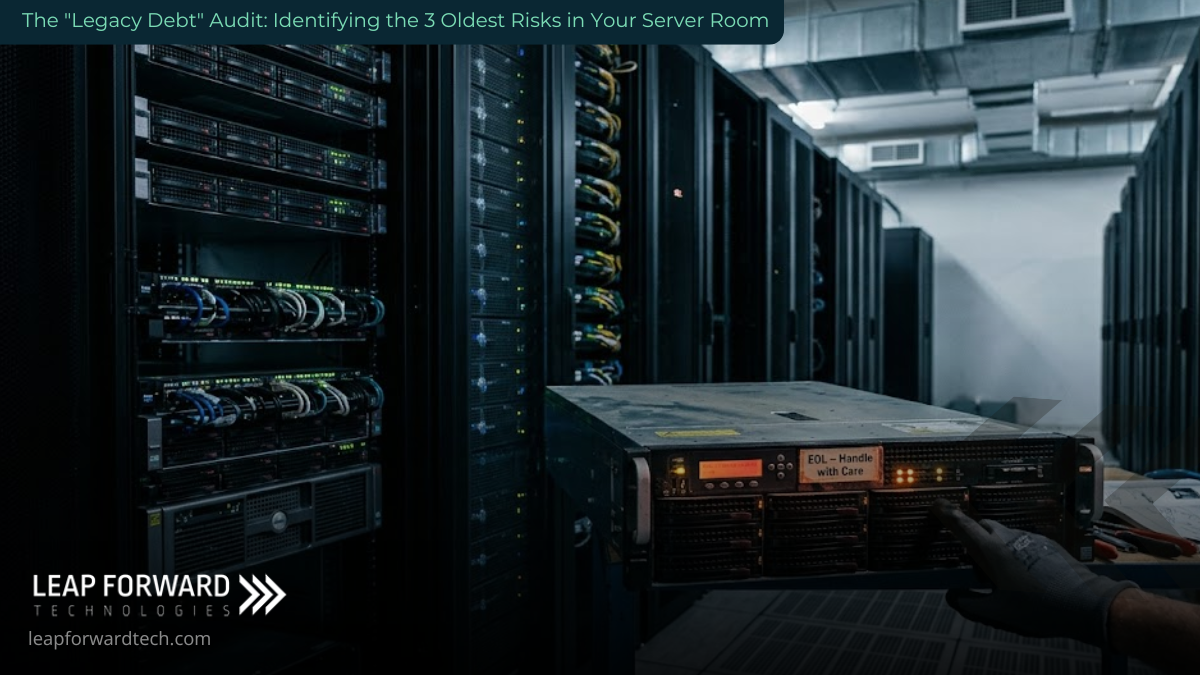
1. End-of-Support Edge Devices
If your server room is a house, these devices are the front door. Firewalls, VPN gateways, and routers are your first line of defense. When they hit End-of-Support (EOS), the manufacturer stops sending security fixes. An unpatched vulnerability on an edge device is an open invitation to your entire network.
- The Audit Check:
- List every firewall and router. Is the firmware still supported?
- Which services are internet-facing?
- Identify “zombie” devices that are plugged in but no longer receive updates.
2. Obsolete Products That Can’t Be Fixed
These are the purest forms of legacy debt systems that are running but literally cannot be secured. There is no clever configuration or “hack” that makes an unsupported OS safe. You are simply managing a countdown to a compromise.
- The Audit Check:
- Identify server OS versions (like Windows Server 2012 or older) that are past support.
- Flag “Business-Critical but Unsupported” apps that require special firewall rules just to stay functional.
- Look for old hypervisors that haven’t been touched in years.
3. The “It Still Works” Server (Basics Drift)
This is the sneakiest risk because it looks fine on the surface. The hardware runs, the lights are green, and no one is complaining. But beneath the hood, the fundamentals have eroded. Patching is inconsistent, unnecessary services are running, and most importantly the backups haven’t been tested under pressure in months.
- The Audit Check:
- Patch Reality: When was the last successful update?
- Backup Confidence: Can you actually restore from that “green” backup? When was the last test?
- Account Hygiene: Are there old admin accounts for employees who left three years ago?
Stop Carrying Silent Risk
Legacy debt doesn’t announce its arrival with a siren. It sits quietly in the background until the day it transforms into a six-figure downtime event.
By running a legacy debt audit, you turn “we should deal with that someday” into an actionable shortlist. You move items from the “too scary to touch” column to the “handled” column. It’s about taking control of your infrastructure so it serves your business, rather than your business serving the hardware.
Modernize Your Infrastructure with Leap Forward Tech
You don’t have to navigate the “don’t touch” zones alone. Leap Forward Tech helps businesses across West Central and Southwest Minnesota from Marshall and Willmar to the surrounding rural hubs audit their environments and build a roadmap for the future.
Whether you’re looking for managed IT services in Alexandria or need a security audit in Worthington, we’re here to help you leap past the debt and into a more secure, reliable setup.
Ready to clear the debt? Contact us today for a comprehensive legacy debt audit.